


JEWELRY EDUCATION
What Is Rhodium Plating?
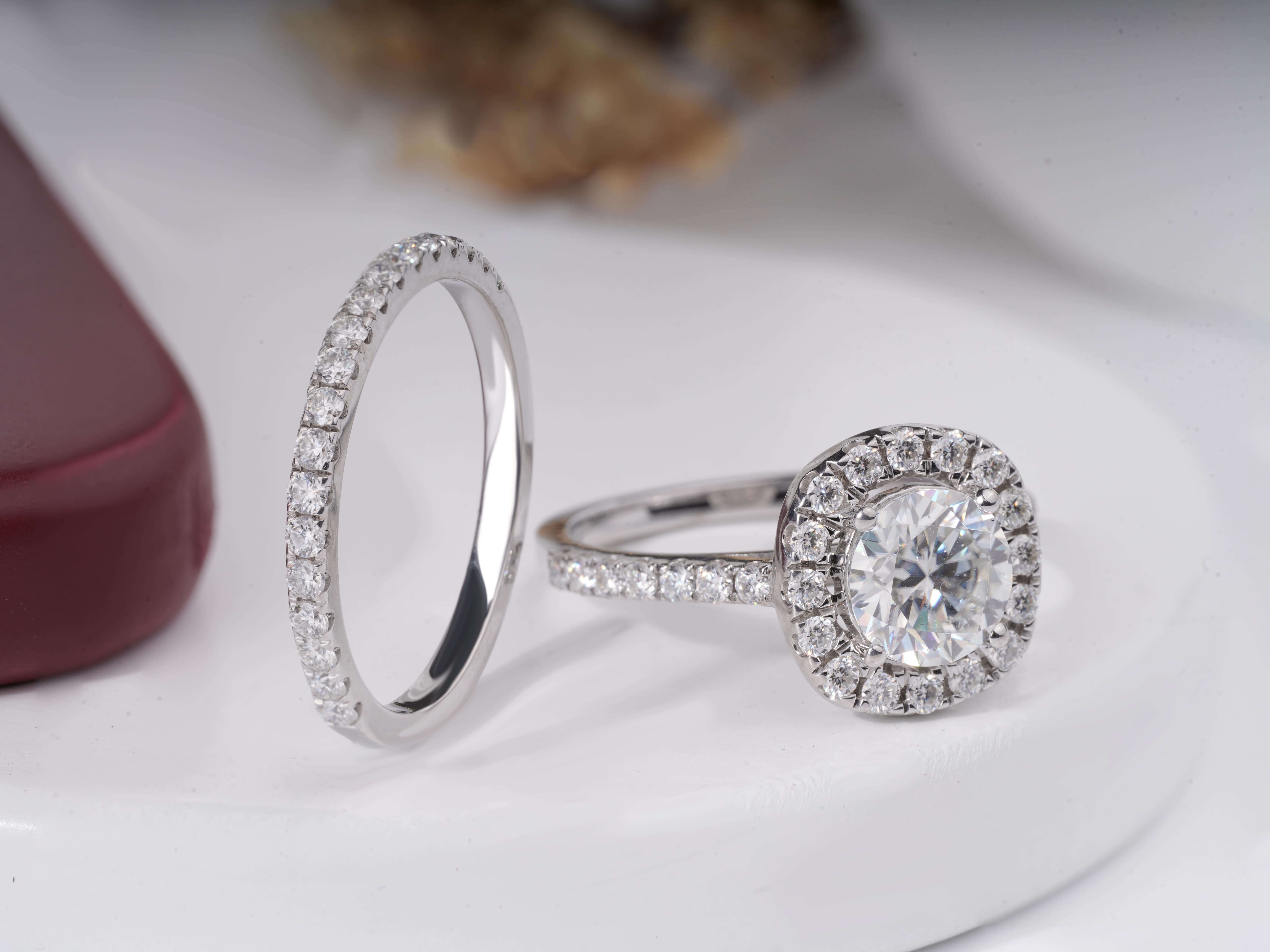
White gold has become one of the most popular choices for fine jewelry, especially for engagement rings and wedding bands. Its clean, bright look works well with diamonds and gemstones, and many people prefer it over the warmer tone of yellow or rose gold. But here’s something most don’t realize: that bright white surface isn’t the natural color of the metal. It comes from rhodium plating.
What Is Rhodium Plating?
Rhodium is a naturally white metal that belongs to the platinum family.
It’s extremely reflective and resistant to corrosion, but it’s also brittle, which makes it unsuitable for solid jewelry.
Instead, jewelers use rhodium to plate white gold (white gold naturally isn’t frosty white; instead, it’s white with muted warm yellowish hues).
The process is done through electroplating. The white gold piece is dipped into a rhodium solution, and an electrical current bonds the rhodium to its surface. The layer of actual rhodium is only about a micron thick, but even so, it makes a big difference. The piece takes on a brighter, whiter appearance that’s sleek and modern – what white gold is popularly known for.
This is why most white gold rings and necklaces look so bright when they’re new—their finish comes from rhodium plating.
Why Is Rhodium Plating Applied?
White gold by itself isn’t a perfect white. It’s made by mixing yellow gold with lighter-colored alloys like nickel, palladium, or silver. The result is a pale yellow or gray tone— not the bright white that many people want.
Rhodium plating is applied to bridge that gap. It creates the crisp white surface that gives white gold a platinum-like look. It also adds a few other benefits:
- Whiter appearance: The reflective finish makes diamonds and other gemstones stand out.
- More durable surface: Rhodium is harder than gold, so it helps protect against scratches.
- Tarnish resistance: Rhodium doesn’t discolor the way some alloys in white gold can.
- Skin-friendly layer: For those sensitive to nickel, rhodium plating can act as a barrier, reducing irritation.
These advantages make rhodium plating a standard for most white gold jewelry today.
Rhodium Plating vs. Platinum Patina
Because rhodium and platinum are both naturally white metals, it’s easy to confuse them. But there are important differences.
Platinum is naturally white all the way through. It doesn’t need any plating to achieve its color. That being said, over time, platinum develops a soft surface patina. This patina can be described as a dull, satin sheen that develops with wear. Some people love this aesthetic since it gives off antique or vintage vibes, while others prefer the frosty white look of a fresh polish. In any case, the patina can be removed with professional polishing and cleaning.
In contrast to platinum, white gold needs rhodium plating to get that white shine. Without it, the yellow undertones of the gold alloy would eventually show.
How often should I rhodium plate my piece?
Rhodium plating is not permanent. Because the coating is thin, it naturally wears down over time, especially on areas of jewelry that get the most contact—like the underside of a ring or the edges of a band.
The good news is that re-plating is straightforward. Jewelers can clean the piece, remove any remnants of the old plating, and apply a fresh layer – the jewelry comes out looking brand new again.
Know that each time a piece is polished and replated, a thin layer of gold does wear away. With that in mind, we suggest rhodium plating a piece only a few times throughout its life to ensure that it doesn’t end up being thinned out.
Caring for Rhodium-Plated Jewelry
While rhodium plating will eventually need refreshing no matter what, a few habits can help extend its lifespan:
- Take jewelry off before using harsh cleaning chemicals or swimming in chlorine.
- Remove rings during heavy activity, like exercising, sports, or gardening.
- Store jewelry separately in soft pouches or lined boxes to avoid scratches.
- Clean in a gentle manner with mild soap, warm water, and a soft cloth. Avoid abrasive cleaners.
Conclusion
White gold requires care to look its best, and rhodium plating is an essential part of that process.
While the original coating of your white gold pieces will gradually wear down, exposing the natural warm hue underneath, regular care and occasional re-plating can restore its crisp, bright finish.
At Kosmima Fine Jewelry, our team of jewelry experts brings over three decades of experience in cleaning, polishing, and replating pieces of all types.
Whether you’re looking to replate an old white gold piece or just looking to learn more about jewelry before your next purchase, our team stands by with knowledge and expertise to serve you.
Come by our local showroom in Chestnut Hill today, and see why we’ve been the Greater Boston Area’s preferred custom jewelers for over 30 years.